
Fashion trends change every season.
Materials stay much longer.
When choosing jewelry for everyday wear, style is often the first thing people notice. A design catches the eye. A finish feels appealing. A trend feels current.
But after weeks, months, and years of wear, another question becomes more important:
How does it perform in daily life?
Will it remain comfortable throughout the day?
Will it resist scratches, moisture, and everyday use?
Will it still look good a year from now?
For accessories designed to be worn regularly, material often matters more than trends.
Quick Answer
For most people, 316L stainless steel offers an excellent balance of durability, affordability, low maintenance, and everyday practicality.
Titanium is often preferred when lightweight comfort, corrosion resistance, and skin sensitivity are the highest priorities.
Neither material is universally better.
The best choice depends on how the jewelry will be worn, what level of comfort is preferred, and what matters most in daily life.
Why Material Matters for Everyday Jewelry
Jewelry is no longer reserved for special occasions.
Today, many people prefer a small collection of versatile pieces they can wear every day—at work, while traveling, during weekends, and throughout ordinary routines.
This shift has changed what people look for in accessories.
Instead of focusing only on appearance, people increasingly value:
• Comfort
• Durability
• Low maintenance
• Long-term wearability
• Timeless design
As a result, modern materials such as 316L stainless steel and titanium have become increasingly popular choices for everyday jewelry.
Both offer advantages that traditional fashion jewelry often struggles to match.
Why 316L Stainless Steel Is One of the Most Popular Jewelry Materials
Among modern jewelry materials, 316L stainless steel has become a favorite for everyday accessories.
Its popularity is not based on trends alone.
It comes from practical advantages that people experience every day.
Excellent Durability
Daily life places constant demands on jewelry.
Accessories are exposed to:
• Sweat
• Water
• Humidity
• Friction
• Temperature changes
• Travel and outdoor activities
316L stainless steel was originally developed for environments where corrosion resistance is essential.
Its protective chromium-rich oxide layer helps resist rust, tarnishing, and surface degradation, allowing it to maintain its appearance even under frequent use.
For many wearers, this means less worry and more confidence in daily wear.
Minimal Maintenance
Many people want jewelry that fits naturally into their routine.
Not jewelry that requires constant polishing.
Not jewelry that needs to be removed before every activity.
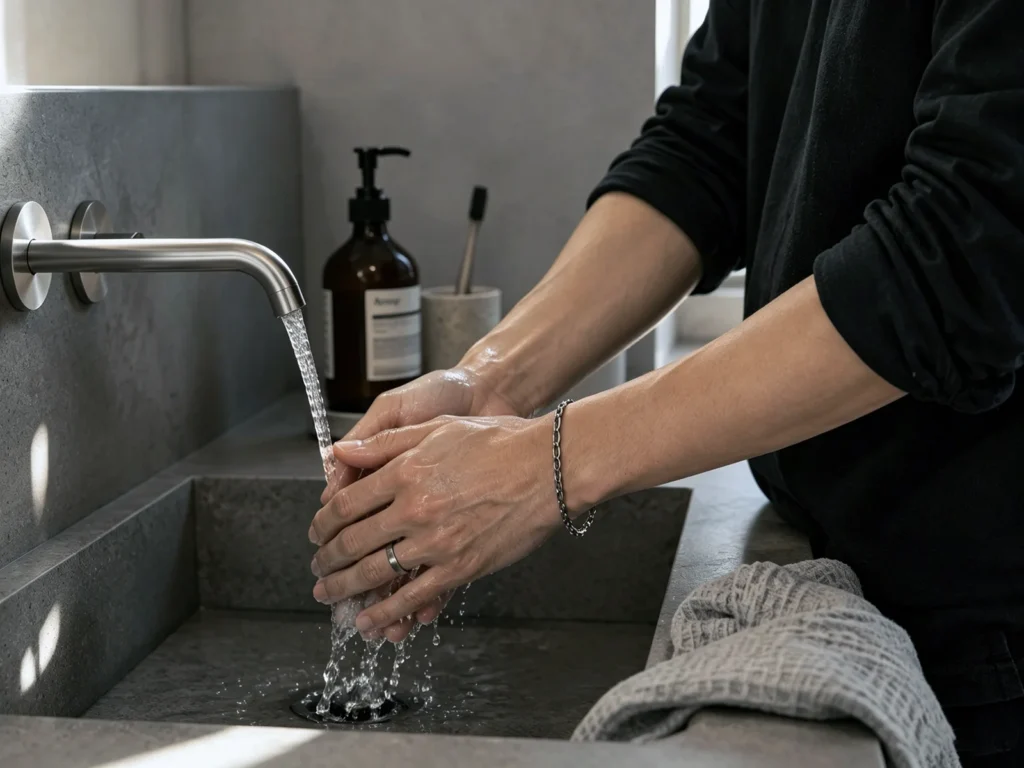
One of the strongest advantages of 316L stainless steel is its ability to retain its appearance with relatively little maintenance.
For busy lifestyles, simplicity matters.
Balanced Weight and Feel
Quality stainless steel offers a reassuring sense of substance without feeling excessively heavy.
Many people appreciate this balance.
The material feels durable and solid while remaining comfortable for extended wear.
When Titanium Becomes the Better Choice
While stainless steel offers balance, titanium focuses on lightness.
The first thing many people notice about titanium jewelry is how surprisingly lightweight it feels.
For individuals who wear accessories throughout the day, this difference can be significant.
Exceptional Comfort
Titanium weighs substantially less than stainless steel.
As a result, rings, bracelets, and necklaces often feel almost unnoticeable during wear.
Some people prefer this sensation because it reduces awareness of the accessory throughout the day.
Outstanding Corrosion Resistance
Titanium is highly resistant to corrosion and performs exceptionally well in demanding environments.
Exposure to moisture, sweat, and changing weather conditions generally has little impact on the material.
A Popular Choice for Sensitive Wearers
Titanium is widely recognized for its biocompatibility and is often preferred by people who experience sensitivity to certain metal alloys.
While material tolerance varies from person to person, titanium has earned a reputation as one of the most skin-friendly options available.
Stainless Steel vs Titanium: A Quick Comparison
| Feature | 316L Stainless Steel | Titanium |
|---|---|---|
| Weight | Moderate | Very Light |
| Durability | Excellent | Excellent |
| Corrosion Resistance | Excellent | Exceptional |
| Maintenance | Low | Very Low |
| Skin Friendliness | Good | Excellent |
| Price | Generally Lower | Generally Higher |
| Everyday Wear | Excellent | Excellent |
Stainless Steel vs Titanium: Which Is Better?
The answer depends on what matters most to you.
Stainless Steel May Be Better If You Prefer:
• A solid, substantial feel
• Excellent durability
• Easy maintenance
• Strong value for everyday wear
Titanium May Be Better If You Prefer:
• Extremely lightweight accessories
• Maximum comfort during extended wear
• Exceptional corrosion resistance
• A minimalist wearing experience
Neither material is universally superior.
The best choice is the one that fits your lifestyle.
Material Value Is Different from Everyday Value
When discussing jewelry materials, conversations often focus on price.
But price does not always determine usefulness.
An expensive material may not suit someone’s daily routine.
A practical material may become a trusted companion worn every day for years.
The more meaningful question is not:
Which material is more valuable?
It is:
Which material fits the way I live?
The answer is different for every person.
Great Jewelry Is More Than Material Alone
Material is important.
But it is only part of the story.
Two accessories made from the same material can feel completely different in everyday use.
Often, the difference comes from details such as:
• Proportion
• Surface finishing
• Weight distribution
• Edge treatment
• Wearing comfort
Good design is often subtle.
It does not demand attention.
Instead, it continues to feel right day after day.
A Luveriko Perspective
At Luveriko, we believe everyday accessories should be designed for real life.
Not for display cases.
Not only for special occasions.
But for ordinary days that matter most.
That belief influences every material choice we make.
We value materials that are:
• Comfortable enough to wear regularly
• Durable enough to accompany daily life
• Refined enough to express personal style quietly
Trends come and go.
Materials remain.
And the right material often becomes something more than an accessory.
It becomes part of your everyday routine.
The best jewelry is not always the piece that attracts the most attention.
Sometimes, it is the piece you simply never feel the need to take off.