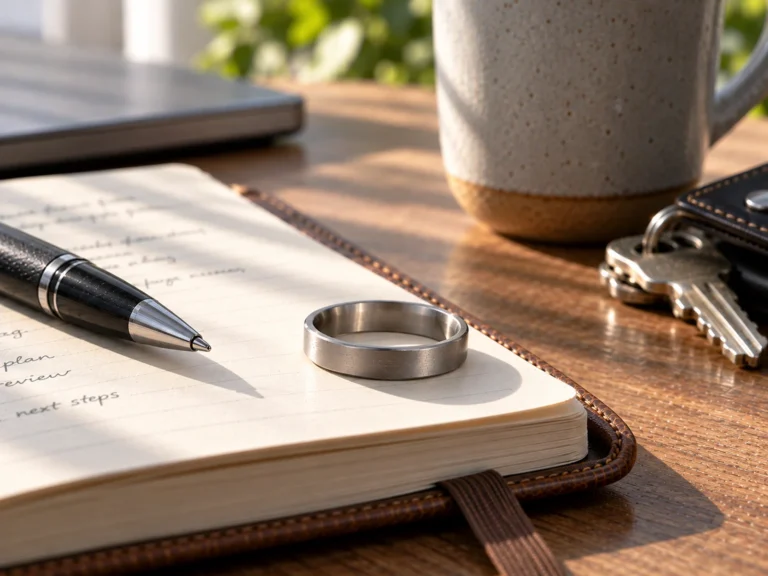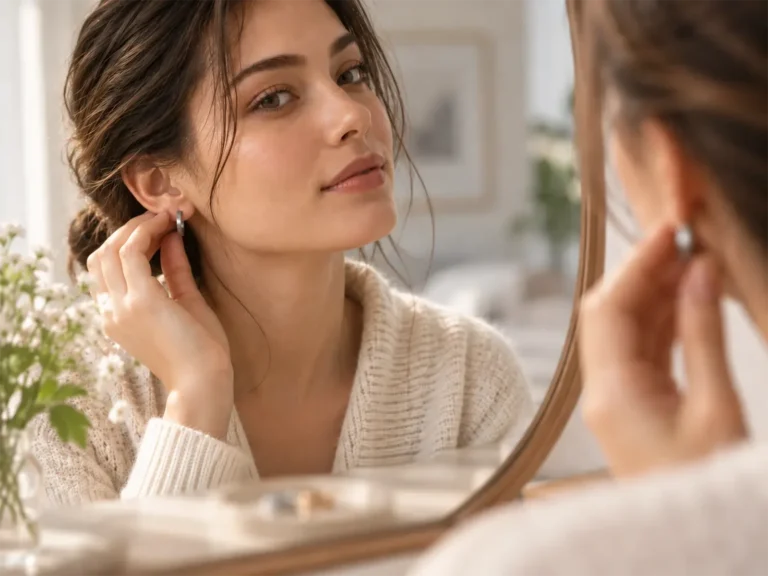

Have you ever noticed how different jewelry finishes react after two people wear the same design for years?
One piece still looks bright and refined.
The other seems dull, worn, or has clearly lost some of its original shine.
Most people assume this is simply a question of quality.
But when jewelry loses shine over time, the reason is often more complex than people expect.
In many cases, the difference has less to do with the jewelry itself and more to do with how it is worn, stored, and cared for over time.
Jewelry rarely changes overnight.
The process is usually gradual.
Small interactions happen every day.
A hand touches a ring.
A bracelet rubs against a desk.
A necklace comes into contact with skin, clothing, and the environment.
Over time, these seemingly insignificant moments begin to shape how a piece looks and feels.
Understanding that process can help explain why some jewelry ages beautifully while others appear to lose their appeal much sooner.
Not Every Change Is Damage
One of the most common misconceptions about jewelry is the belief that it should always look exactly the way it did on the day it was purchased.
In reality, jewelry is designed to be worn.
And anything that becomes part of everyday life will naturally show signs of that life.
Tiny surface marks.
Softened reflections.
Subtle changes in texture.
These are often normal signs of use rather than defects.
A leather wallet develops character through years of handling.
A favorite watch gradually gains small signs of wear.
Jewelry follows a similar pattern.
The goal is not necessarily to keep a piece looking brand new forever.
The goal is to help it age well.
What Actually Causes Jewelry To Lose Shine?
When people think about wear, they often imagine dramatic events.
A hard impact.
A deep scratch.
A fall onto a hard floor.
Yet most changes in jewelry appearance come from far smaller causes.
Everyday exposure plays a surprisingly large role.
Skin oils gradually build up on surfaces.
Sweat leaves behind minerals and residue.
Soap, lotion, sunscreen, and cosmetics can create thin films that reduce reflection.
Dust and environmental particles settle into tiny surface textures.
Over time, these layers change the way light interacts with the surface.
The jewelry itself may not have changed very much.
But the way it reflects light has.
And shine is largely a matter of light.
Why Highly Polished Jewelry Appears To Change Faster
Many people believe polished jewelry scratches more easily.
In reality, polished surfaces do not necessarily scratch faster.
They simply reveal scratches more clearly.
A mirror-polished surface reflects light in a highly uniform way.
When tiny scratches interrupt that smooth reflection, the human eye notices the change immediately.
Even very small marks can become visible under certain lighting conditions.
This is why a highly polished ring can appear to lose its shine relatively quickly despite remaining structurally unchanged.
The surface is still intact.
The reflections have simply become less uniform.
Light becomes scattered rather than reflected in a perfectly consistent direction.
In many cases, what people perceive as a “loss of shine” is actually a change in how light is reflected rather than significant material wear.
Why Brushed And Matte Finishes Often Age Differently
Not all finishes interact with light in the same way.
Brushed finishes contain fine directional textures.
Matte finishes scatter light rather than reflecting it sharply.
Because these finishes already contain controlled surface patterns, small scratches often blend into the existing texture.
The jewelry is not necessarily experiencing less wear.
The wear is simply less noticeable.
This is one reason many people who wear jewelry every day prefer brushed or matte finishes.
They often maintain a more consistent appearance over longer periods of time.
Highly polished surfaces tend to showcase every change.
Brushed surfaces tend to hide them.
Neither approach is better.
They simply create different aging characteristics.
Why Do Some People Notice Changes More Than Others?
Interestingly, not everyone experiences the same level of visible wear.
Some people wear jewelry daily and rarely notice any difference.
Others feel their jewelry loses its shine surprisingly quickly.
Several factors influence this.
Personal skin chemistry varies from person to person.
Some people naturally produce more oils.
Others perspire more frequently.
Climate also matters.
Jewelry worn in humid coastal environments experiences different conditions than jewelry worn in dry climates.
Daily habits can have an effect as well.
Someone who exercises while wearing jewelry may expose it to sweat more often than someone who removes it beforehand.
Even occupation can play a role.
A ring worn by someone working primarily at a desk experiences different contact patterns than a ring worn in a more physically demanding environment.
Over time, these differences accumulate.

Why Surface Finishing And Jewelry Finishes Matter More Than Realized
When people discuss jewelry quality, conversations often focus on materials.
Materials certainly matter.
But surface finishing deserves just as much attention.
The finish determines how a piece reflects light.
How it feels against the skin.
How easily wear becomes visible.
And how gracefully it changes over time.
Two pieces made from the same material can age very differently if their finishes are different.
This is one reason experienced jewelry designers often pay close attention to finishing details.
The finish is not merely decorative.
It plays an important role in the long-term wearing experience.
Small Habits That Help Jewelry Stay Looking Better
The good news is that maintaining appearance usually doesn’t require complicated routines.
A few simple habits can make a meaningful difference.
Wiping jewelry with a soft cloth after wearing it helps remove oils and residue before they accumulate.
Allowing jewelry to dry before storage reduces unnecessary moisture exposure.
Storing pieces separately helps minimize surface contact and friction.
Occasional cleaning removes buildup that can dull reflections over time.
None of these habits are difficult.
Yet together they can significantly influence how a piece looks years later.
The goal is not perfection.
Consistency matters far more than intensive maintenance.
Why Well-Worn Jewelry Can Still Look Beautiful
Many of the most meaningful pieces of jewelry are not the ones that look untouched.
They are the ones that have accompanied years of everyday life.
Travel.
Work.
Celebrations.
Ordinary routines.
Over time, jewelry becomes connected to personal experiences.
A perfectly preserved piece may look new.
A well-loved piece often feels personal.
This is why aging and beauty are not always opposites.
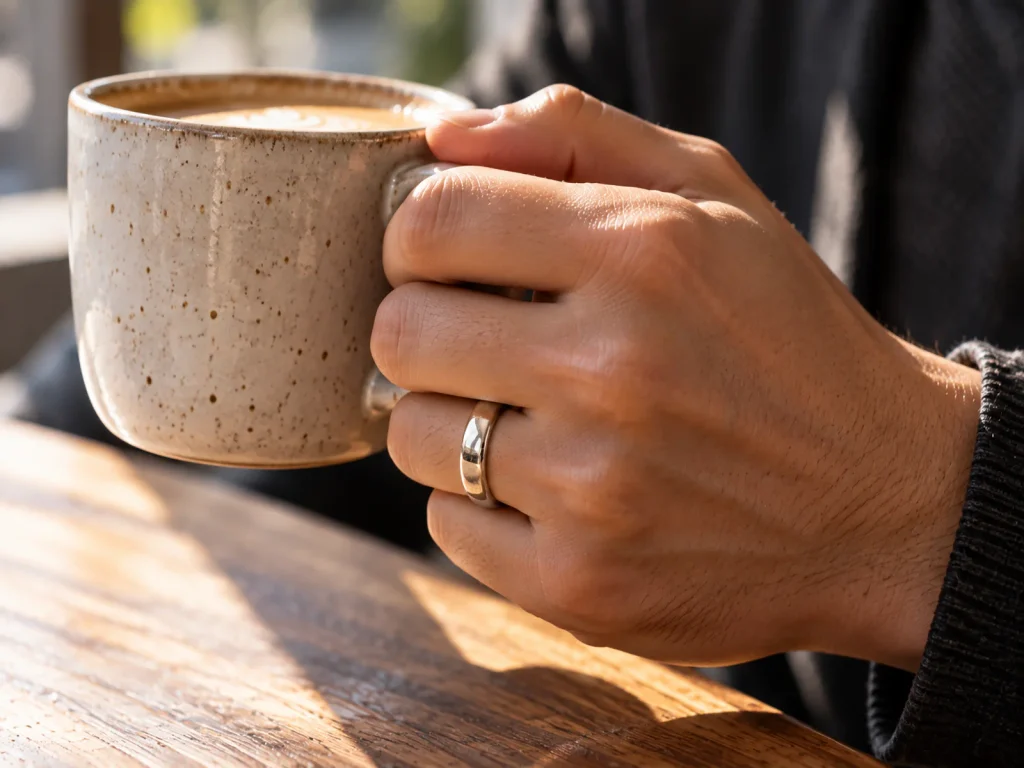
Sometimes the subtle signs of wear are simply evidence that a piece has fulfilled its purpose.
Not by remaining protected.
But by being worn.
A Luveriko Perspective
At Luveriko, we believe jewelry is meant to accompany life rather than remain protected from it.
The way a piece ages is not an afterthought.
It is part of the experience of owning it.
Some changes are worth preventing.
Others are simply part of the story.
Understanding how finishes interact with light, how daily habits affect surfaces, and how materials respond to long-term wear helps us make better choices from the beginning.
Because meaningful jewelry is rarely the piece that stays untouched.
It is the piece that continues to feel right after years of everyday use.
The goal is not to prevent every sign of wear.
It is to choose pieces that age in a way you continue to appreciate.
Jewelry rarely changes overnight.
Understanding how different jewelry finishes evolve over time turns daily wear into part of its character.
And those moments become part of its story.