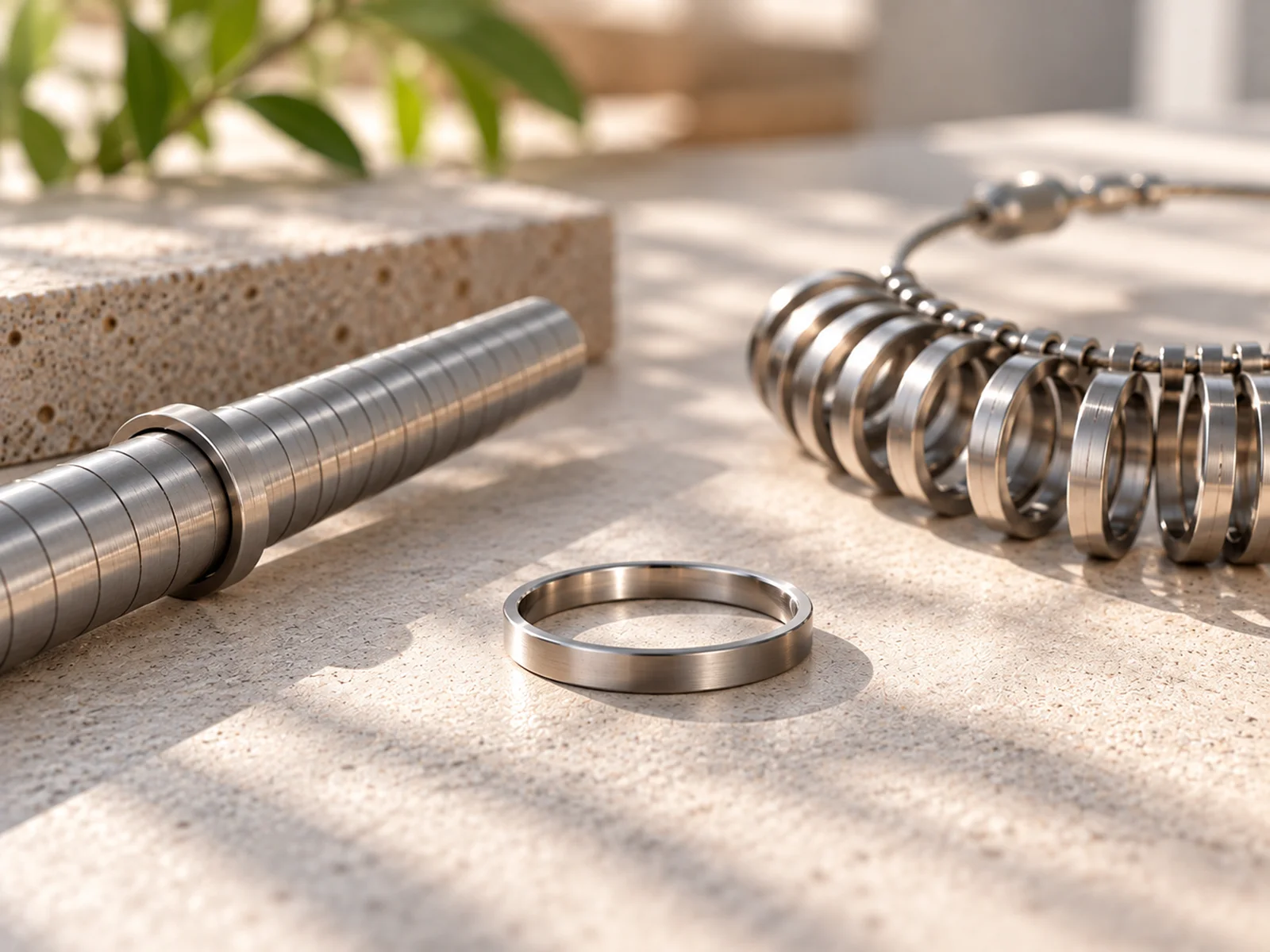

Titanium rings are known for their lightweight feel and durability, but before buying one, many people ask an important question: Can titanium rings be resized if they no longer fit?
The answer is not a simple yes or no. Some plain titanium rings may be adjusted by a specialist, usually within limited boundaries. Others cannot be resized without affecting their structure, surface finish, or decorative details.
Understanding these limitations before buying can help you choose a comfortable fit and avoid an expensive mistake later.
Why Is Titanium Difficult to Resize?
Gold and silver rings can often be resized by cutting the band, removing or adding metal, joining the ends, and polishing the surface. These conventional methods do not always transfer directly to titanium.
Titanium rings can be manufactured using different processes, and their construction affects how easily they can be modified. Titanium also requires appropriate equipment and technical expertise for certain machining and joining operations. As a result, a jeweler who routinely resizes gold and silver rings may not offer the same service for titanium.
The challenge is not simply that titanium is hard. Its material properties, manufacturing method, and the process required to change its dimensions all affect what can be done.
Some specialist manufacturers offer limited adjustments to their own titanium rings. Depending on the design, they may be able to remove a controlled amount of material from the inside of the band or use another manufacturer-specific method.
However, these techniques are not universally applicable. A process that works for one plain band may be unsuitable for a ring with a different construction or surface treatment.
The key point: titanium rings are not universally impossible to resize, but resizing should never be assumed to be available.
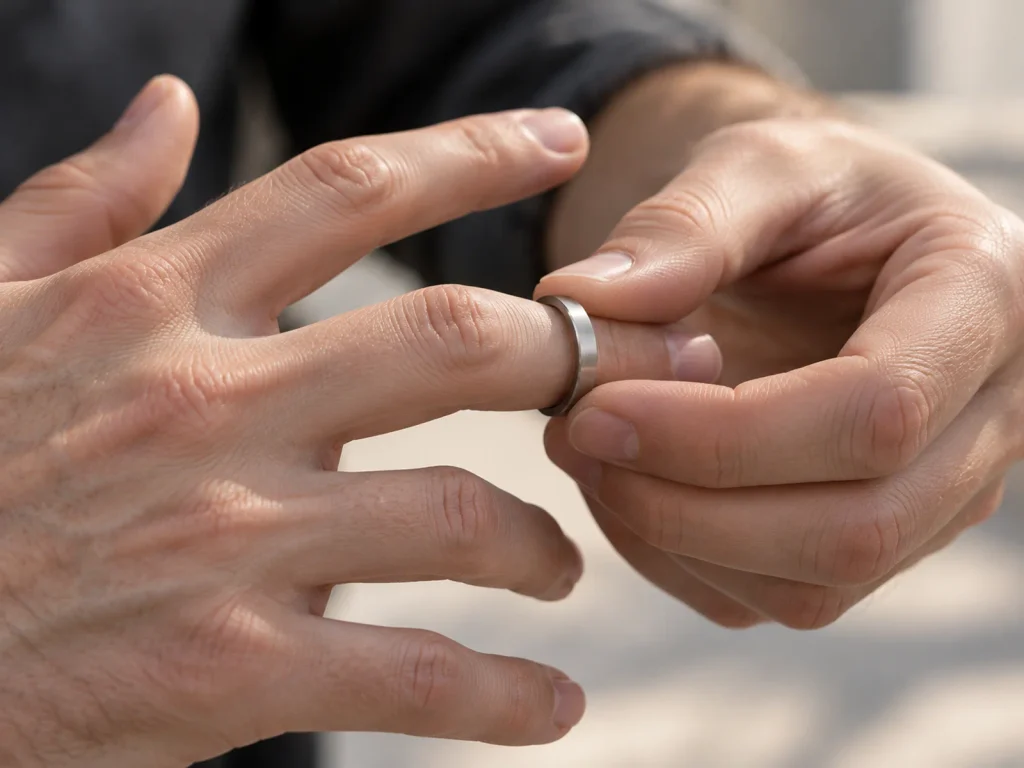
Which Titanium Rings Are Harder to Resize?
The feasibility of resizing depends on more than the material itself. The ring’s construction, thickness, surface treatment, and decorative elements can all limit the available options.
- Plain, Solid Titanium Bands
A simple, solid titanium band without decorative inlays or complex settings generally offers the greatest potential for adjustment.
Even then, the result depends on the ring’s dimensions and material. Removing material from the inside may create slightly more room, but it also reduces the band’s wall thickness.
Making a ring smaller presents a different challenge. Conventional cutting and soldering methods used for gold and silver are not always suitable for titanium. Whether a smaller fit can be achieved depends on the specific ring and the methods available to the manufacturer or specialist.
A specialist should assess the actual ring before confirming whether either approach is appropriate. - Polished, Brushed, Colored, or Coated Surfaces
Surface treatments can complicate resizing even when the underlying metal is technically workable.
A polished titanium ring may require refinishing after machining. Depending on the process and original finish, the repaired area may not match the surrounding surface perfectly.
Brushed or satin finishes present a similar issue. Their appearance depends on the direction and consistency of the surface texture. Reproducing that texture after an adjustment requires suitable finishing techniques.
Colored titanium rings may use different surface treatments or coatings, depending on the product. Machining or refinishing can alter these finishes, and restoring the original appearance may not always be possible. Whether a ring can be resized without visible changes depends on its specific finish and construction.
This does not mean every colored or brushed titanium ring is impossible to resize. The specific finish and proposed adjustment method must be evaluated together. - Rings With Inlays, Stones, or Complex Designs
Decorative elements can place further limits on resizing.
Inlaid materials: Rings containing wood, stone, ceramic, or other materials may be difficult to enlarge. Changing the ring’s circumference can place stress on the inlay or disturb the bond between materials.
Gemstone settings: Changing a band’s dimensions may affect the setting geometry or the forces acting on the stones. Tension-set designs are especially dependent on precise dimensions and should not be altered without approval from a qualified specialist.
Engravings and patterns: Continuous patterns, grooves, and decorative details may become misaligned or distorted when the ring’s dimensions change. Even if the metal can be worked, the original design may not be recoverable without rebuilding the piece.
The important distinction is between two questions: Can the metal be processed, and can the finished ring retain its original structure and appearance?
A positive answer to the first does not guarantee a positive answer to the second.
How to Choose the Right Titanium Ring Size
Since resizing may be limited, getting the size right before purchasing is particularly important.
Measure Your Finger Properly
The most reliable starting point is to have your finger measured by a jeweler using appropriate ring-sizing gauges.
The ring should pass over the knuckle without excessive force and settle comfortably where it will normally be worn. A ring that fits the base of your finger but cannot pass over the knuckle is not a practical fit.
If you measure at home, use a reliable ring-sizing tool and follow the seller’s instructions. Paper strips and string can produce inaccurate results because they may stretch, shift, or fail to account for the knuckle.
If you already own a ring that fits comfortably, it can provide a useful reference. However, compare it with the intended ring’s width and shape rather than relying on the size alone.
Ring sizes can vary between sizing systems and manufacturers, so check the seller’s specific size chart rather than relying on a size number alone.
Account for Normal Finger-Size Changes
Your fingers do not remain exactly the same size throughout the day.
Temperature, activity, and other everyday conditions can cause temporary changes. Fingers may feel tighter in warm conditions and looser in cold conditions.
For a more reliable result, measure at different times on more than one occasion, ideally under ordinary conditions. Avoid relying on a single measurement taken when your hands are unusually cold, hot, or swollen.
Your goal is not to find the smallest or largest possible measurement. It is to identify a size that remains comfortable across normal daily variations.
Consider the Ring’s Width
A ring’s width affects how it feels on your finger.
A wider band generally covers more of the finger and may feel tighter than a narrow band of the same nominal size. For this reason, measuring with a sizing band close to the width of the ring you intend to buy can be more useful than measuring with a narrow ring sizer alone.
If your finger measurement falls between two sizes, do not automatically choose the larger one. Consider the band’s width, the shape of your knuckle, how easily you want the ring to pass over it, and whether you prefer a closer or looser fit.
For a titanium ring that may not be adjustable later, ask the seller or manufacturer for a recommendation based on the actual design.
What If Your Titanium Ring No Longer Fits?
Even a carefully selected ring may become uncomfortable over time. If that happens, the best solution depends on the ring’s construction and the reason for the fit change.
Contact the Original Manufacturer
Explain whether the ring feels too tight or too loose, and provide the model, size, and relevant design details. The manufacturer may know whether its particular ring can be adjusted and which methods are suitable.
Ask About an Exchange or Replacement
If the ring is new and the size is incorrect, an exchange may be simpler and more reliable than attempting a repair.
Check the return window, whether worn rings are eligible, and who pays return shipping before purchasing.
Consider a Specialist Assessment
If the ring is valuable or has a distinctive design, ask a specialist to inspect it before any work begins. Confirm the likely result, possible surface damage, and whether the work would affect the manufacturer’s warranty.
Replace the Ring When Adjustment Is Unsuitable
If the required size change is too large, the design is too complex, or the original finish cannot be restored reliably, a replacement in the correct size may be the most sensible option.
Avoid attempting to stretch, compress, cut, or heat a titanium ring yourself. An unsuccessful adjustment can permanently damage the ring and may create sharp edges or other problems.
What to Check Before Buying a Titanium Ring
Before placing an order, confirm the following points with the seller:
• Sizing guidance: Is the size chart specific to the ring, and does it account for band width?
• Adjustment policy: Can this exact model be resized, and if so, by which method and within what limits?
• Exchange conditions: Can you exchange the ring if the original size is unsuitable?
• Return deadline: How long do you have to request an exchange, and must the ring remain unworn?
• Warranty coverage: Would third-party resizing or refinishing affect the warranty?
• Long-term options: If your finger size changes in the future, does the manufacturer offer adjustment, replacement, or another practical solution?
These questions are especially useful when buying online, where you cannot try the exact ring before ordering.
A clear exchange policy can be more valuable than a general promise that a ring is adjustable. What matters is whether there is a realistic solution for the particular ring you are buying.
Frequently Asked Questions
Can a titanium ring be made bigger?
Some plain titanium rings may be enlarged slightly by a specialist using a suitable method. The amount of adjustment depends on the ring’s material, wall thickness, design, and construction. Larger changes may require a replacement.
Can a titanium ring be made smaller?
Making a titanium ring smaller is often more difficult than simply adjusting its fit. Traditional resizing methods used for gold and silver may not be suitable, and the options depend on the ring’s construction and design. Contact the original manufacturer or a specialist to determine whether an adjustment is possible. In some cases, exchanging or replacing the ring may be the more practical solution.
Can any jeweler resize a titanium ring?
No. Many jewelers specialize in traditional precious metals and may not offer titanium resizing. Contact the original manufacturer or a repair specialist with experience in the specific type of titanium ring.
Are titanium rings with inlays or coatings harder to resize?
They can be. Inlays, coatings, surface colors, and decorative patterns may be damaged or altered during resizing. The metal may be technically workable while the finished design cannot be restored to its original condition.
Should I buy a titanium ring if my finger size may change?
That depends on your circumstances and the seller’s policies. If you expect your size to change, prioritize accurate measurement, a suitable exchange policy, and a manufacturer that clearly explains its long-term options.
A Luveriko Perspective
Titanium is a practical material for everyday jewelry, but choosing the right ring involves more than appearance or durability.
Because resizing options may be limited, a comfortable fit and a clear understanding of the seller’s exchange policy matter from the beginning. Before buying, consider not only how the ring looks today, but also what options you will have if your needs change.
A good everyday piece should suit both your style and the realities of everyday wear.
A ring should fit not only your finger, but the life you wear it through.
Choose with care, so it can become part of your everyday.