
Most people own more jewelry than they actually wear.
A ring sits in a drawer.
A bracelet is worn only on special occasions.
A necklace comes out a few times a year.
Yet many people choose to wear the same jewelry every day.
Sometimes for months.
Sometimes for years.
Sometimes they barely remember putting it on.
And that raises an interesting question:
Why do some people wear the same jewelry every day?
The answer often has less to do with fashion than we might think.
More Than Decoration
Most jewelry begins as an aesthetic choice.
We choose a piece because we like how it looks.
The design feels right.
The material appeals to us.
It fits our personal style.
But something changes over time.
The longer a piece is worn, the less it functions as decoration and the more it becomes part of everyday life.
It becomes familiar.
Reliable.
Almost invisible.
Not because it lacks meaning, but because it has become integrated into daily routine.
The jewelry we wear most often is rarely the jewelry we think about the most.
Why Familiar Things Feel Comfortable
Psychologists have long observed a phenomenon known as the mere exposure effect.
The principle is simple: people often develop a stronger preference for things they encounter repeatedly.
What feels familiar tends to feel comfortable.
Over time, that familiarity can become part of how we experience everyday life.
This applies to places.
Songs.
Objects.
And even jewelry.
A ring worn every day gradually becomes part of a person’s sense of normality.
A bracelet that remains on the wrist for months begins to feel less like an accessory and more like part of one’s daily environment.
Its presence becomes reassuring precisely because it is familiar.
Small Rituals Reduce Decision Fatigue
Modern life requires thousands of small decisions every day.
What to wear.
What to eat.
What to prioritize.
What to ignore.
Because of this, many people naturally simplify parts of their routine.
Some wear the same watch every day.
Some carry the same notebook for years.
Others continue wearing the same ring or necklace.
The reason is not always sentimental.
Often, it is practical.
A trusted piece removes one more decision from the day.
It simply belongs.
There is comfort in that simplicity.
Jewelry As A Personal Marker
Not all forms of self-expression are intended for other people.
Some are meant for ourselves.
A frequently worn piece of jewelry can become a quiet reminder of identity.
It may represent:
• A personal value
• A life stage
• A memory
• A commitment
• A sense of continuity
Interestingly, many people continue wearing certain pieces even when nobody else notices them.
The meaning exists whether or not anyone else sees it.
In that sense, everyday jewelry often functions less as decoration and more as a personal marker.
The Comfort Of Consistency
Life changes constantly.
Jobs change.
Cities change.
Relationships change.
Interests evolve.
But certain objects remain.
A familiar ring.
A simple bracelet.
A necklace worn through different seasons of life.
These objects can provide a subtle sense of stability.
Not because they solve problems.
But because they remain present while other things change.
That consistency can feel surprisingly valuable.
Why Simpler Pieces Often Stay Longer
When people wear the same piece for years, it is rarely the most elaborate item they own.
In many cases, it is the simplest.
Minimalist jewelry tends to adapt more easily to everyday life.
It works with different clothing styles.
Different occasions.
Different stages of life.
It does not demand attention.
It simply fits.
The pieces that stay with us longest are often those that balance:
• Comfort
• Durability
• Versatility
• Simplicity
Read [our guide on titanium vs stainless steel] to learn how material density affects daily durability.
This may explain why timeless designs often outlast trends.
They continue to feel relevant long after seasonal fashions have faded.
The Difference Between Ownership And Attachment
Many people own jewelry.
Far fewer develop a genuine attachment to it.
Ownership is simple.
Attachment develops slowly.
It emerges through repetition.
Through everyday experiences.
Through ordinary moments that accumulate over time.
A ring worn during a first job.
A bracelet worn while traveling.
A necklace present during important life events.
Over the years, meaning is often built rather than purchased.
And that meaning cannot be measured by material value alone.
Everyday Jewelry Is Often About Presence, Not Attention
The pieces people wear every day are not always the most expensive.
Nor are they necessarily the most fashionable.
Often, they are simply the pieces that feel most natural to wear.
The pieces that disappear into routine.
The pieces that quietly accompany ordinary days.
And perhaps that is the real appeal of everyday jewelry.
Not that it attracts attention.
But that it continues to feel right.
Day after day.
Year after year.
A Luveriko Perspective
At Luveriko, we believe the best accessories are not always the ones that stand out the most.
They are often the ones that become part of everyday life.
The pieces you reach for without thinking.
The pieces that remain comfortable after hours of wear.
The pieces that quietly accompany your routines, travels, conversations, and ordinary moments.
Because over time, great jewelry becomes more than an object.
It becomes familiar.
And familiarity has a value of its own.
Not because it attracts attention.
But because it continues to feel right.
Day after day.
Year after year.
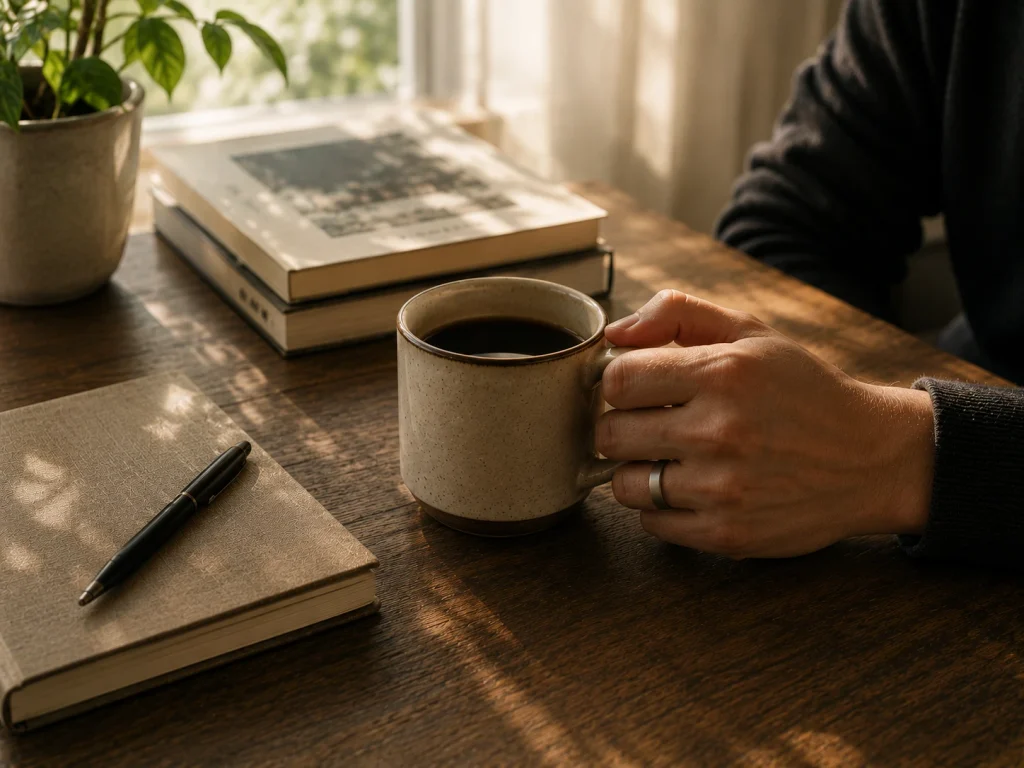
The jewelry people wear every day is rarely the piece that attracts the most attention.
More often, it is the piece that simply feels like part of who they are.